Tips & Ressources

Beyond the Eye Test: How Smarter Scheduling Transforms the Modern Optical Store

Kimon Gerhard in a suit with white shirt
By Kimon Gerhard
Updated: Published:

Discover how TIMIFY helps optical retailers connect appointments, resources and walk-ins to improve customer flow and use capacity more effectively.
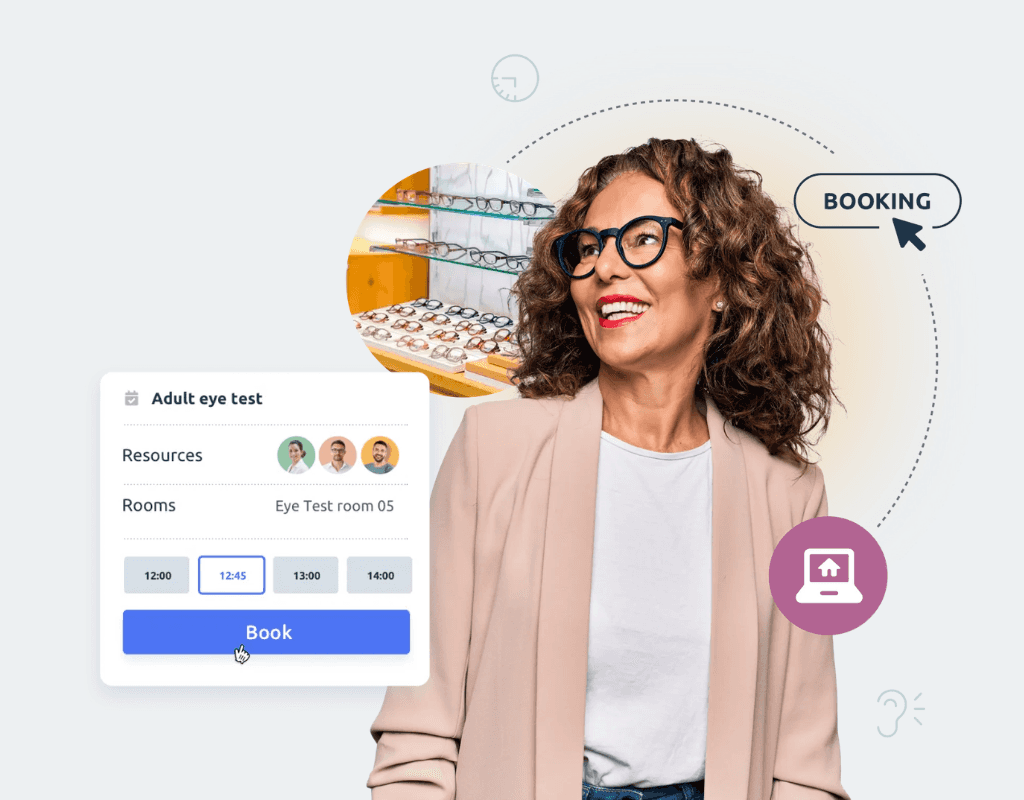

a woman laughing surrounded by flying bubbles. One is a optician store photo, the others are a booking button and a laptop icon
Back

An optical store can look perfectly organised before the doors open. Eye tests are booked, consultation slots are assigned and staff schedules are in place. Then the day begins: a customer arrives early, someone walks in for a glasses adjustment, another customer wants to collect a new pair and a repair takes longer than expected.

The calendar may still look orderly, but the reality inside the store is much more dynamic. For optical retailers, effective appointment management therefore goes beyond filling a calendar. It means connecting planned appointments, the right resources and the actual customer flow in-store.

The calendar looked perfectly planned until the doors opened

Scheduled appointments are only one part of the day. Optical stores also need to handle adjustments, repairs, collections, spontaneous advice and follow-up consultations.

Some interactions take only a few minutes, while others require specialist knowledge, equipment or more time than expected. The challenge is not simply to create an appointment schedule, but to manage the moment when planned and unplanned demand meet.

An optical store is more than an appointment calendar

A traditional booking system mainly answers one question: When is an appointment slot available? For optical retailers, that is often not enough.

An eye test may require a qualified optometrist, a specific room and the right equipment. A contact lens consultation may depend on another specialist or resource. TIMIFY helps retailers take these dependencies into account during booking, so availability reflects what is actually required to deliver the service.

woman with a tablet in her hands

Make sure the right resources are available

Resource Management and Resource Dependencies help ensure that a service is only bookable when the necessary resources are available. Depending on the service, this could mean the right employee, consultation room or equipment.

A free employee does not automatically mean that an eye examination can take place. The required combination of resources needs to be available at the same time, helping retailers reduce scheduling conflicts before they reach the store.
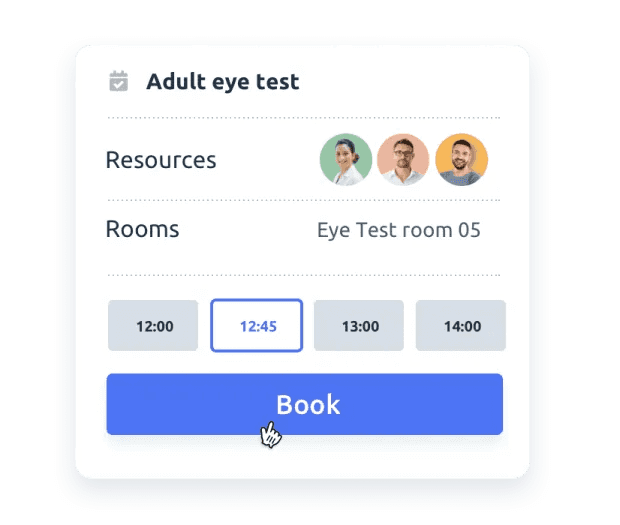
a booking widget for an adult eye test

Use resource capacity more intelligently

Even when several employees can perform the same service, they do not need to be treated equally. Some team members may have specialist expertise that should be preserved for more complex appointments, while others may be better suited to shorter consultations or standard services.

Resource Prioritisation helps prefer eligible resources based on defined rules, allowing retailers to make better use of available capacity and protect specialist availability where it matters most.
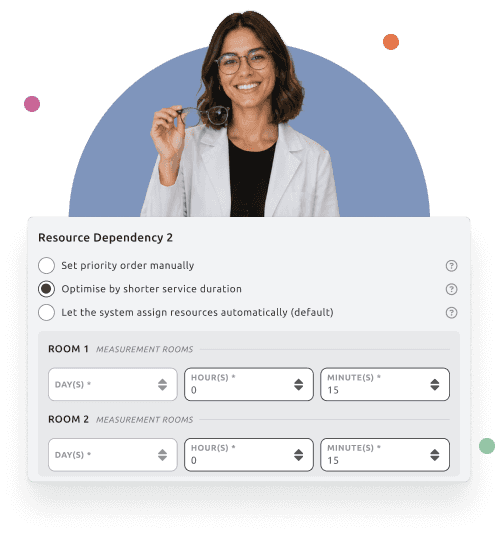
female optician laughing, holding a pair of glasses in her hand

Connect appointments and walk-ins with Smart Serve

Even the best planned schedule cannot predict exactly how the day will unfold. Customers arrive early or late, walk-ins appear unexpectedly and repairs take longer than planned.

This is where TIMIFY Smart Serve connects the schedule with what is actually happening in-store. With Concierge Mode, employees can check in booked customers and add walk-ins when they arrive, while Queue Manager brings everyone currently waiting into one live operational view.

Your schedule shows who was supposed to arrive. Queue Manager shows who actually needs service now.

This makes it easier to manage booked appointments and spontaneous customer needs together instead of treating them as separate processes.


timify queue manager for timify smart serve product screenshots

Make the customer journey easier to manage

For employees, Smart Serve provides a clearer picture of current demand. For customers, the experience becomes more coordinated because booked appointments and walk-ins can be handled through the same service process.

This is especially useful during busy periods, when several different customer needs compete for attention at the same time. Rather than relying on informal queues or individual staff members to keep track of who is waiting, the store has one shared operational view.

Scale the same model across every store

For optical retailers with multiple locations, each store may have different employees, equipment, rooms and levels of demand. TIMIFY allows retailers to define central services and standards while each location continues to work with its own resources and real availability.

This creates a more consistent service model across the network without assuming that every store operates with exactly the same capacity.
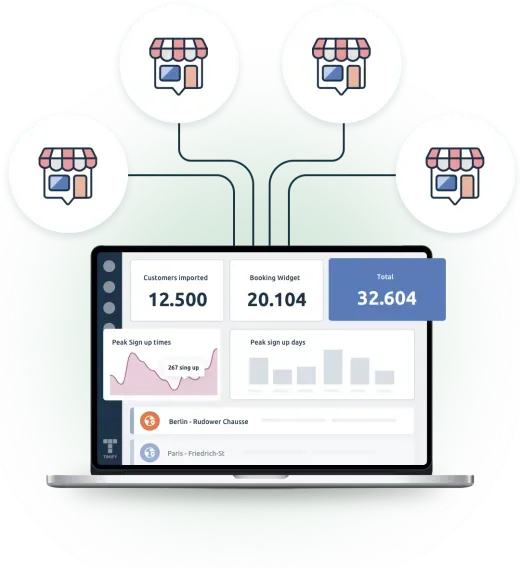

one laptop with the timify dashboard on the screen. Several branches floating around, showing that the product is made for companies with many branches

Understand demand beyond booked appointments

Bookings show expected demand, but they do not show the full picture. Walk-ins matter too, especially in optical retail where spontaneous visits are a normal part of the day.

As an additional intelligence layer, TIMIFY can help retailers better understand the relationship between planned bookings, expected walk-in demand and available capacity. This can support better staffing and capacity decisions over time.

From booking to in-store service

The modern optical store combines scheduled consultations, spontaneous customer needs and specialist resources. A booking calendar is therefore only the starting point.

TIMIFY helps optical retailers connect appointment scheduling, intelligent resource allocation and live in-store customer flow, creating a smoother experience for customers and a more manageable day for employees.

Plan better. Serve smarter. Make every resource count.​​​​​​​

Frequently Asked Questions (FAQs)

Why is appointment scheduling especially challenging for optical stores?
Optical stores need to manage more than scheduled eye tests and consultations. Walk-ins, repairs, collections, adjustments, early or late arrivals, and appointments requiring specialist staff or equipment can all affect the day’s schedule. Effective scheduling therefore needs to account for both planned appointments and real-time customer demand.
How does resource prioritisation improve capacity management?
Resource prioritisation allows retailers to define which eligible employees or resources should be assigned to particular services first. This helps preserve specialist capacity for more complex appointments while directing standard services to other qualified team members.
Can appointment and resource management be standardised across multiple optical stores?
Yes. Optical retailers can define central services and operating standards while allowing each location to work with its own employees, rooms, equipment and actual availability. This supports a more consistent customer experience without assuming that every branch has the same capacity.
How can optical retailers avoid resource conflicts when booking appointments?
Optical retailers can use resource management and resource dependencies to make services bookable only when all required resources are available. This can include the right employee, consultation room, specialist or equipment, helping prevent conflicts before the customer arrives.
How can optical stores manage appointments and walk-ins together?
TIMIFY Smart Serve connects scheduled appointments with real-time in-store demand. Concierge Mode enables staff to check in booked customers and add walk-ins, while Queue Manager provides a shared view of everyone currently waiting for service.
How can scheduling data help optical retailers plan staffing and capacity?
Looking beyond booked appointments gives retailers a more complete view of demand. By considering planned bookings, expected walk-ins and available capacity together, optical retailers can make better-informed staffing and resource decisions over time.
Kimon Gerhard in a suit with white shirt

About the author

Kimon Gerhard

Kimon is currently pursuing a degree in Business & Economics at WU Vienna, he has been part of TIMIFY for over a year as a Working Student. His focus lies primarily on Sales, Partnerships (Business Development), and more recently, Marketing. In his role, he carries out market research, reaches out to potential partners or sales leads, and contributes to marketing initiatives that strengthen TIMIFY’s position as a leading SaaS solution for scheduling and resource management.

Related articles

a optician happy using an appointment booking solution
Optimizing Optical Retail with Smart Appointment and Inventory Management
Learn more
TIMIFY Smart Serve App
Virtual queue management with the TIMIFY Smart Serve App
Learn more
Queue Management Systems (QMS) 101: How to Control The Flow of Waiting Lines Effectively
Learn more