Tips & Resources

100 Locations, One Scheduling Strategy: How Central Management Creates Consistency at Scale

a man with a green suit
By Lukas Alberter
Updated: Published:

Learn how TIMIFY helps multi-location businesses centralise scheduling, standardise services and permissions, and maintain local flexibility at scale.
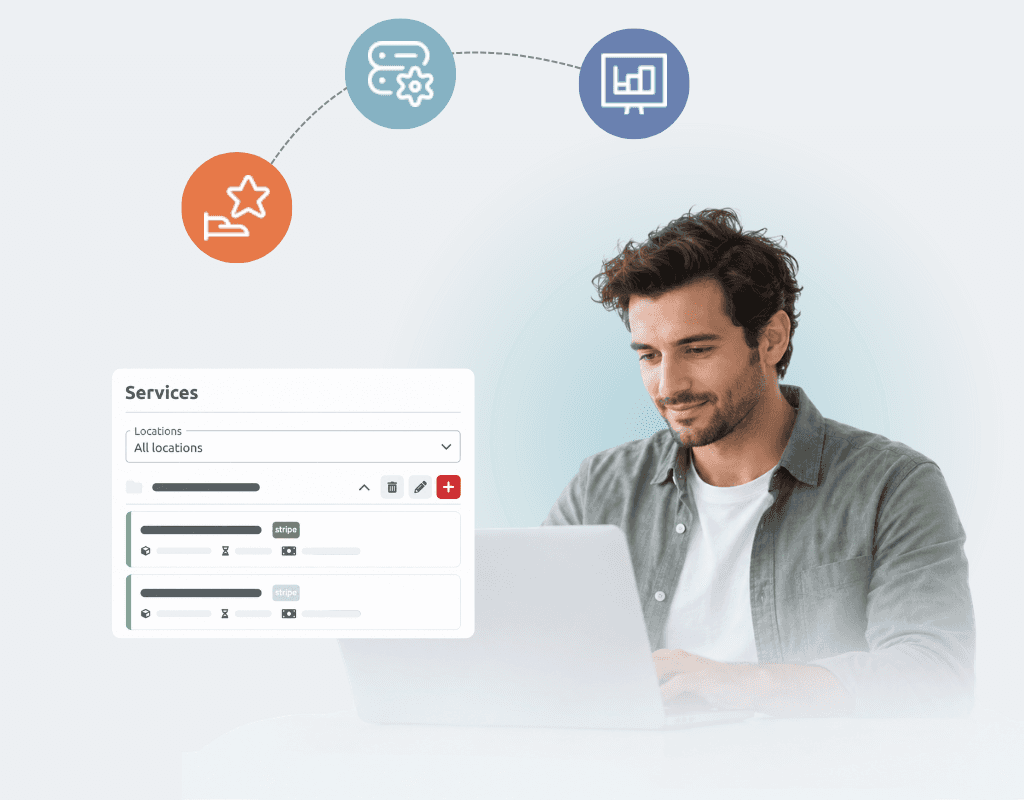

a man sitting infront of a laptop with a timify screenshot in the front, showing local and global services in timtify
Back

Running appointment scheduling for one location is relatively straightforward. Running it across 10 locations is more complicated. At 100 or 500 locations, scheduling becomes a question of governance.

The challenge is no longer simply whether customers can book an appointment. It is whether every location follows the right scheduling strategy while still having enough flexibility to respond to local requirements.

Services need to be consistent. Access rights need to be controlled. New locations need to fit into the existing operating model. At the same time, local teams may have different employees, resources, availability or service requirements.

Managing all of this location by location creates unnecessary administrative work. It also makes consistency increasingly difficult as the organisation grows.

Centralised scheduling management addresses that problem.

With TIMIFY's Branch Manager, multi-location organisations can establish global configurations across their branch network while retaining local flexibility where it makes operational sense.

The principle is straightforward: standardise what should be consistent, manage it centrally, and leave room for local differences where they matter.

Why enterprise scheduling becomes a governance challenge

Consider a business operating 100 locations.

It offers a 30-minute consultation across its network. Without central management, each location may need to create and maintain that service independently.

Over time, small differences can appear.

One branch changes the service name. Another uses a different duration. A new location sets up the service differently. Another team follows an outdated configuration.

None of these differences necessarily looks significant in isolation. Across a large network, however, they can lead to a fragmented customer experience and a growing administrative burden.

And services are only one part of the picture.

Enterprise scheduling can involve customer data, resource categories, booking settings, permissions and other configurations that need to work together across multiple locations.

For enterprise teams, that raises an important question:

Which scheduling decisions should be controlled centrally, and which should remain in the hands of individual locations?

A scalable scheduling setup needs room for both.

One central layer for a multi-location scheduling strategy

TIMIFY's Branch Manager provides a centralised environment for organisations operating multiple branches, locations or franchises.

Rather than treating every location as a completely separate scheduling environment, administrators can maintain global configurations across the organisation while individual branches retain their own local setup where required.
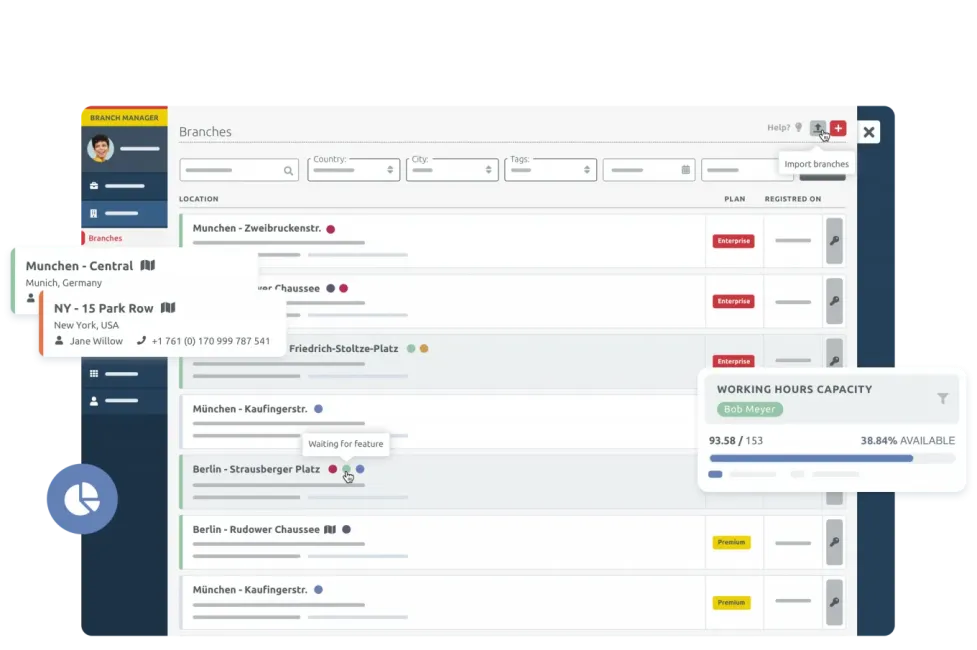
TIMIFY Branch Manager dashboard showing central management of multiple business locations, branch details, and capacity.

In practice, this separates scheduling management into two levels:

  • Global governance defines the structures and configurations that should apply across the organisation.
  • Local operations reflect the reality of each location, including its resources and location-specific requirements.

That distinction becomes increasingly important as the number of locations grows.

When opening a new branch, for example, the question is no longer just, "How do we configure this location?" Instead, teams can determine which parts of their existing scheduling model should apply there from the beginning.

Create services once and distribute them across locations

Services are a good example of where central management can eliminate repetitive administration.

With TIMIFY Global Services, a service created in the Branch Manager acts as a global template. TIMIFY replicates that service into the relevant branches rather than requiring administrators to recreate the same offering manually in every location.

A company-wide consultation, for example, can be configured centrally with its service structure and booking-related settings.

Services can be assigned to all branches or only to selected locations. A standard service might therefore be available across the entire network, while a new offering is initially introduced at a smaller selection of locations.
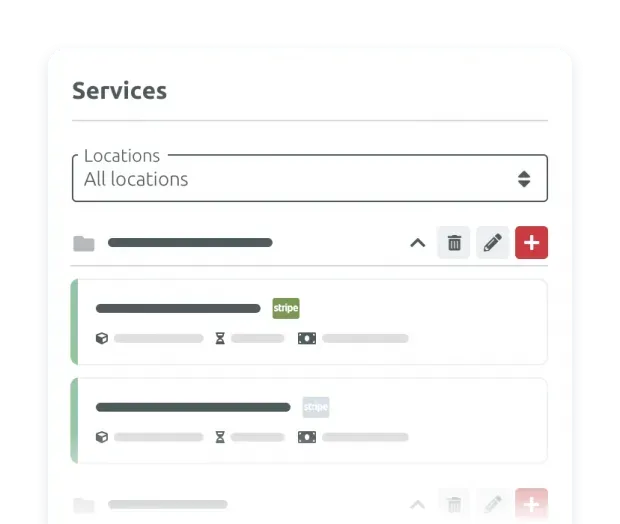
TIMIFY Global Services interface for centrally managing and distributing services across multiple locations.

For organisations with regional services, different location formats or pilot programmes, this provides more control over how services are rolled out without requiring separate setups for every branch.

Standardisation doesn't have to mean rigidity

Centralisation raises an obvious concern: what happens when an individual location genuinely needs something different?

A service might take longer at a particular branch. Different resources might deliver it. Pricing may vary. Or a location may need to adapt other aspects of the service to its operating model.

TIMIFY's global service model accommodates these differences.

Each branch receives its own copy of the global service and can make supported local adjustments without changing the service for every other location.

This gives enterprise teams a practical alternative to choosing between completely independent branch configurations and a rigid, identical setup across every location.

Scale shouldn't mean giving up control or local flexibility.

Instead, organisations can establish a shared foundation and allow deliberate deviations where local operations require them.

Keep resources and day-to-day operations local

Not everything benefits from being identical across an organisation.

The resources available to deliver an appointment are inherently local. A location in London will have different employees, rooms or equipment from a location in Madrid.

Global resource categories can provide a common structure for organising those resources, while the actual resources and operational availability remain relevant to the individual branch.
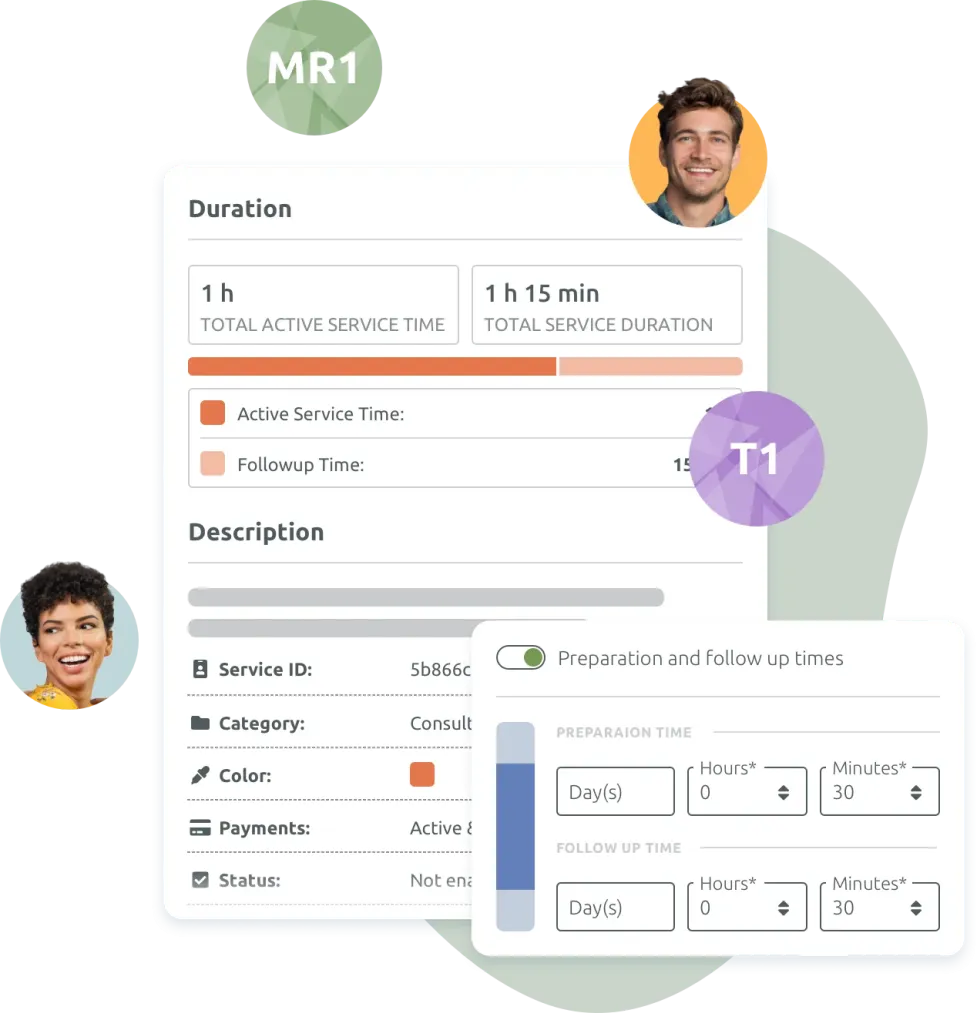
TIMIFY service settings showing appointment duration, preparation and follow-up times, and local resource options.

The same principle applies to service delivery.

Head office might determine what a service is and establish its general configuration, while the branch determines who can deliver it based on its local resources.

This allows organisations to maintain a recognisable scheduling model across locations while accounting for the operational differences between individual branches.

Control who can change what

Local flexibility works best when responsibilities are clearly defined.

Giving every user unrestricted access can undermine the consistency that central management is intended to create. Restricting every change to head office, however, can turn routine local administration into a bottleneck.

TIMIFY Permission Types allow organisations to create reusable access profiles for different users or resource groups. Instead of defining permissions separately for every employee, teams can establish permission types and apply them where appropriate.

Permissions can control access to areas including calendars and bookings, customers, resources, statistics and services.

A multi-location organisation can therefore decide which responsibilities belong centrally and which can be delegated to local teams. Branch managers might receive the access needed for day-to-day operations, for example, while more sensitive or organisation-wide configurations remain under tighter control.

Make adding the next location easier than adding the first

A scalable scheduling strategy should not become more difficult every time the organisation grows.

When a new branch is created or imported into TIMIFY, existing global templates, including services, resource categories and permissions, can be populated into that branch.

Instead of rebuilding the scheduling structure from scratch, a new location can start with an established foundation and then apply the local configurations it needs.

Consider what that means across a large network.

If a configuration has to be created separately in 100 locations, an organisation has 100 individual setups to maintain. With global templates, the shared structure can be managed centrally, leaving local teams to focus on the exceptions that actually require their attention.

The same principle applies when an organisation grows from 100 to 101 locations.

The 101st branch should not require a new scheduling strategy. It should become part of the one the organisation already has.

From appointment scheduling to scheduling governance

At enterprise scale, scheduling software needs to support more than the booking itself.

Organisations need a way to determine which services and configurations should be shared, where exceptions are justified, who can make changes, and which operational decisions belong at branch level.

TIMIFY's Branch Manager provides a central point for managing global scheduling configurations while supporting branch-level operations and selected local adaptations.

Central management does not have to mean controlling every decision made by every branch. Its purpose is to establish a reliable framework within which those decisions can be made.

For an organisation with 100, 500 or more locations, that distinction matters.

The goal is not to make every branch identical. It is to make sure every branch can operate within the same scheduling strategy while retaining the flexibility it needs locally.

Build a scheduling model designed to scale

Adding locations shouldn't mean multiplying scheduling administration.

With TIMIFY, enterprises can centrally manage global configurations, distribute services across their branch network, establish reusable permission structures and retain local flexibility where operations require it.

Whether you're already managing a large location network or preparing your scheduling infrastructure for further expansion, a clear division between central governance and local control can make growth easier to manage.

Frequently Asked Questions

What is centralised scheduling management?
Centralised scheduling management allows an organisation to manage common scheduling configurations across multiple locations from a central level. Individual locations can still manage local operational requirements where the scheduling model permits it.
Can individual branches customise globally managed services in TIMIFY?
Yes. Global services are replicated to branches, and individual branches can adapt supported values locally, such as duration or resource assignments. These local changes do not alter the service configuration in other branches.
How do permissions help multi-location scheduling?
Permission Types provide reusable access profiles that determine which parts of TIMIFY different users can access and manage. This helps organisations delegate operational responsibilities while maintaining control over who can view or modify scheduling data and configurations.
How can businesses keep appointment services consistent across multiple locations?
With global service templates, organisations can define services centrally and distribute them to relevant branches. This provides a shared service structure while still allowing supported local adjustments when individual locations have different requirements.
Can a service be offered only at selected branches?
Yes. Global services can be assigned to all branches or specific branches. This can support regional services, location-specific offerings or pilot programmes without requiring a separate enterprise-wide service setup.
What happens when a new branch is added?
When a new branch is created or imported, existing global templates such as services, resource categories and permissions can be populated into it. This helps new locations start from the organisation's established scheduling structure rather than requiring every configuration to be recreated manually.
a man with a green suit

About the author

Lukas Alberter

Lukas embarked on his professional journey after earning a Bachelor and Master's degree in Learning Sciences and Educational Research and Management at Ludwig-Maximilians-Universität München. With hands-on experience across HR, recruitment, and educational roles—from tutoring to shaping hiring and organizational strategy at Limehome and Diakonie Rosenheim—he joined TIMIFY in a People & Culture capacity, where he now thrives as P&C Manager. Blending his academic background in learning systems with real-world HR initiatives, Lukas is dedicated to crafting an enriched workplace culture and employee experience at TIMIFY.

Related articles

timify branch manager
How TIMIFY Branch Manager Optimizes Appointment Scheduling for Multi-Location Businesses
Learn more
man with a tablet smiling at the camera. A Sync screenshot on his left.
One Customer, Multiple Locations: How to Prevent Double Bookings Across Your Network
Learn more
TIMIFY branch manager
How to Manage Appointment Bookings Across Multiple Stores (Without the Chaos)
Learn more