Appointment Scheduling Beyond the Calendar: Where We’re Heading in the Next 5 Years

Updated: Published:
Discover how appointment scheduling is evolving—beyond calendars—into intelligent, automated systems that serve both humans and machines.


Boyan Tanchev
Founder and Chief Product Officer TIMIFY
Appointment Booking Today: Simple on the Surface, Complex Beneath
From an end-consumer perspective, appointment booking is still about speed and clarity. Five clicks are faster than typing into a chatbot. Connecting a personal calendar to a third-party booking widget sounds clever in theory, but in practice it introduces friction, privacy concerns, and technical hurdles that most people simply don’t want to deal with.
People know when they have time. They don’t want to “optimize” that decision.
That’s why many recent experiments (AI chat booking, calendar matching, deep personal integrations) failed to gain traction with consumers. Not because the ideas were bad, but because they solved problems users didn’t actually have.
The real evolution has happened elsewhere.
The Next 12–24 Months: Optimization Through Intelligence
In the short term, the biggest shift will be optimization through data and AI.
Scheduling systems will increasingly learn from historical performance:
- Which employees complete services faster than average?
- Which services rarely use their full time slot?
- Where can duration be reduced without affecting quality?
- How can idle time be minimized without burning out teams?
AI is particularly good at spotting these patterns. Not to replace humans, but to continuously suggest better configurations: shorter slots here, redistributed capacity there, different availability windows next week.
For multi-location businesses, this also means fewer last-minute interventions. If scheduling is balanced properly, fewer employees need to be moved around reactively.
Integrations: From Nice-to-Have to Mandatory
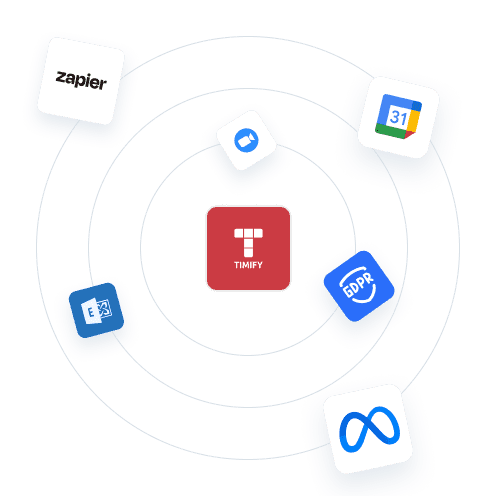
As enterprise software becomes more interconnected, integrations are no longer optional. Modern scheduling systems must:
- Connect to CRM, ERP, HR, and analytics tools
- Sync data conditionally, not blindly
- Respect compliance rules like GDPR automatically
- Support automation platforms like Zapier or n8n
This isn’t about syncing records—it’s about embedding scheduling into the wider operational fabric of a business.

Related articles

Tips & Resources
Machine Learning in Scheduling: The Future of Appointment Management

10 March, 2025

Tips & Resources
The Future of Real Estate: How Time Management Apps and Technologies Are Shaping the Industry

28 November, 2023

Product & Feature
Course Planning Headaches? A Smart Course Scheduling Software Can Help
01 April, 2025